Flow agencyAutomotive
CLATRA Flash
Analyze vehicle accident photos to identify damaged parts, damage types, severity, and recommended repair methods with supporting evidence.
- Average processing time
- 1 min 33 s
- Median cost
- $0.41
- What you put in
- 1–120 photos of the accident vehicle
- What you get
- Damage type
- Severity
- Repair method
- Repair evidence
- Damage, recommended repair method, and photo evidence for each part
Our own measurement · 6 accident cases · Time is the average, cost the median · Costs at public list prices
Upload accident photos, and what needs fixing is laid out
Upload photos of the accident vehicle all at once, and CLATRA Flash finds the damage in them and lays out which parts were damaged and how.
It breaks down the damage type, severity, and recommended repair method by part, and attaches to every judgment the photos it was based on.
Why you can hand it off
Organized by part
For each part, such as the front bumper or front fender, it shows the damage type, severity, and recommended repair method separately.
Every judgment comes with evidence photos
For each result, it records which photos it looked at to decide, so anyone can check again right away.
It follows damage across multiple photos
Even when the same damage appears in several photos, it links the evidence together, and it takes up to 120 photos per case.
We measured it on the same input
We gave the same accident photos to the latest frontier AI agents, too, and compared accuracy, time, and cost.
More accurate than frontier AI agents
vs. Claude Opus 5.5 · Accuracy (F1) 0.462 → 0.642
We gave the same task to three of the latest frontier models, too. Every model with a selectable reasoning level ran at its highest.
-
Flow
- Steps
- 7
- Range
- 5–14
-
GPT-6 Astra
- Steps
- 14
- Range
- 12–17
-
Claude Opus 5.5
- Steps
- 52
- Range
- 27–76
-
Gemini 4 Argon
- Steps
- 501DNF
- Range
- First run only
-
Flow
- Accuracy (F1)
- 0.642
- Precision
- 0.761
- Recall
- 0.554
-
GPT-6 Astra
- Accuracy (F1)
- 0.524
- Precision
- 0.597
- Recall
- 0.467
-
Claude Opus 5.5
- Accuracy (F1)
- 0.462
- Precision
- 0.563
- Recall
- 0.391
-
Gemini 4 Argon
- Accuracy (F1)
- No answer
- Precision
- —
- Recall
- —
Our own measurement · Average of 6 accident cases · Accuracy as actually measured by working professionals · Costs at public list prices
Up to 11× faster than frontier AI agents, at up to 88% less cost
vs. Claude Opus 5.5 · 17 min 41 s → 1 min 33 s · $5.10 → $0.60
This is the time and cost it took to finish one case of the same accident photos. Every clock runs from the same starting line.
-
Flow
- Time
- 1 min 33 s
- Cost
- $0.60
- Tokens
- 87K
-
GPT-6 Astra
- Time
- 3 min 6 s
- Cost
- $1.72
- Tokens
- 480K
-
Claude Opus 5.5
- Time
- 17 min 41 s
- Cost
- $5.10
- Tokens
- 7.34M
-
Gemini 4 Argon
- Time
- 55+ minDNF
- Cost
- $16.10
- Tokens
- 21.47M
Our own measurement · Average of 6 accident cases · Accuracy as actually measured by working professionals · Costs at public list prices
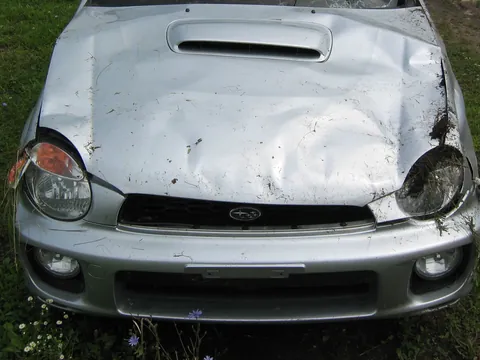
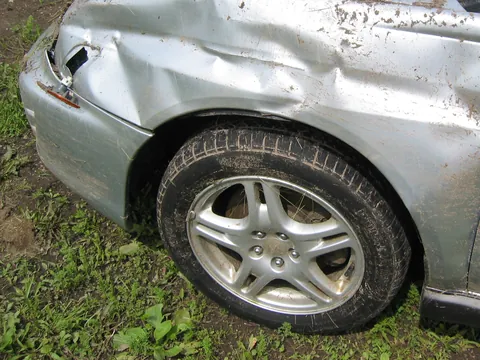
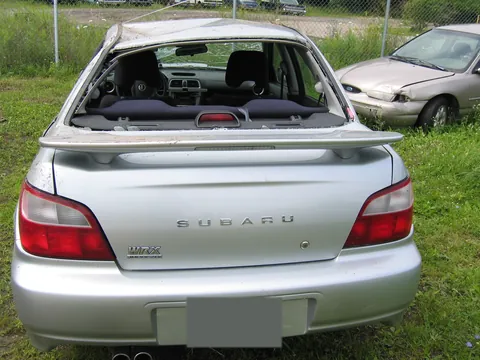
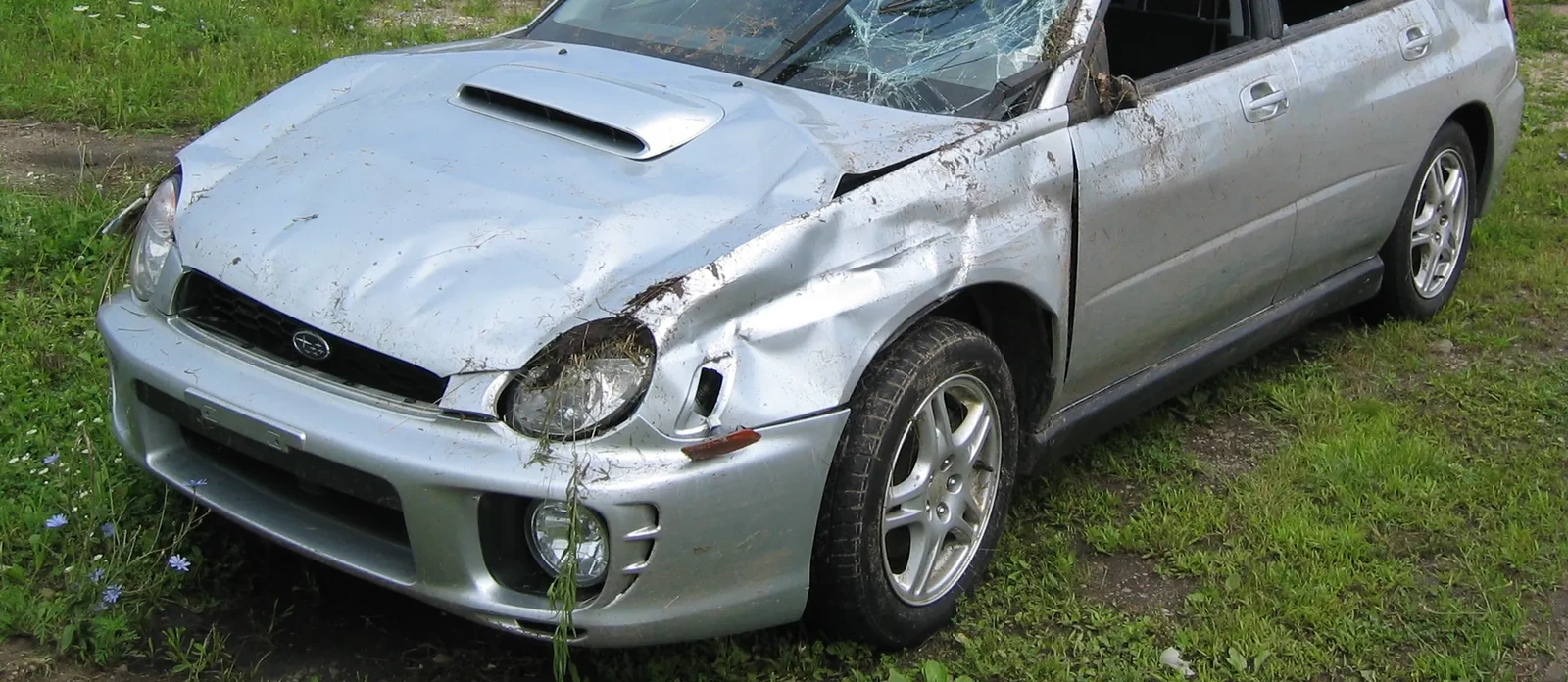
From twelve accident photos to repair work for each part
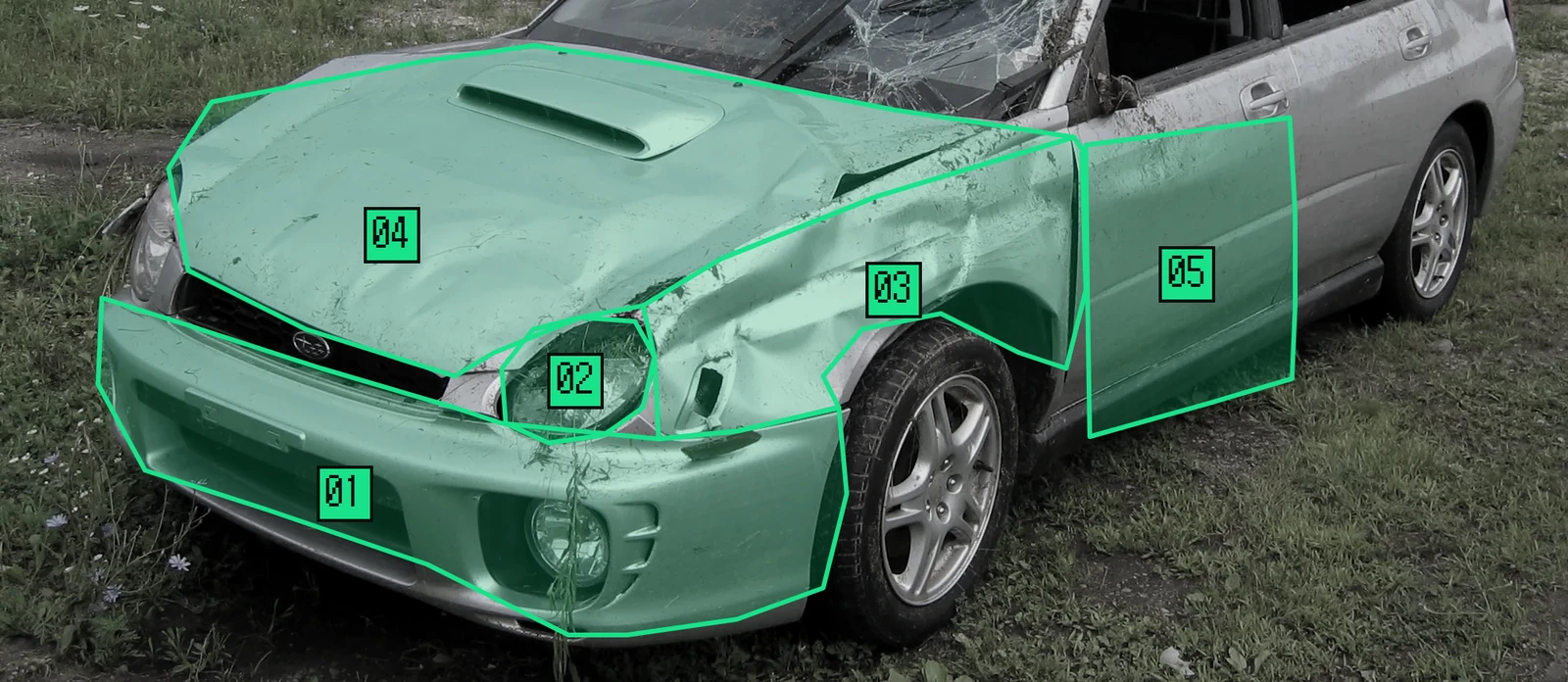
What went in: only photos of the accident vehicle. What you get: the damage and recommended repair method for each part, and the evidence photos behind each judgment.
 Input
 Flow
Repair work for each part
Example6 parts · Evidence photos for every judgment
- 01Front bumperBroken · SevereRecommended: Replacement
- 02Left headlampShattered · SevereRecommended: Replacement
- 03Left front fenderDent · ModerateRecommended: Sheet metal repair · Painting
- 04HoodDent · ModerateRecommended: Sheet metal repair · Painting
- 05Left front doorDent · SevereRecommended: Replacement
- 06Rear windowShattered · SevereRecommended: Replacement
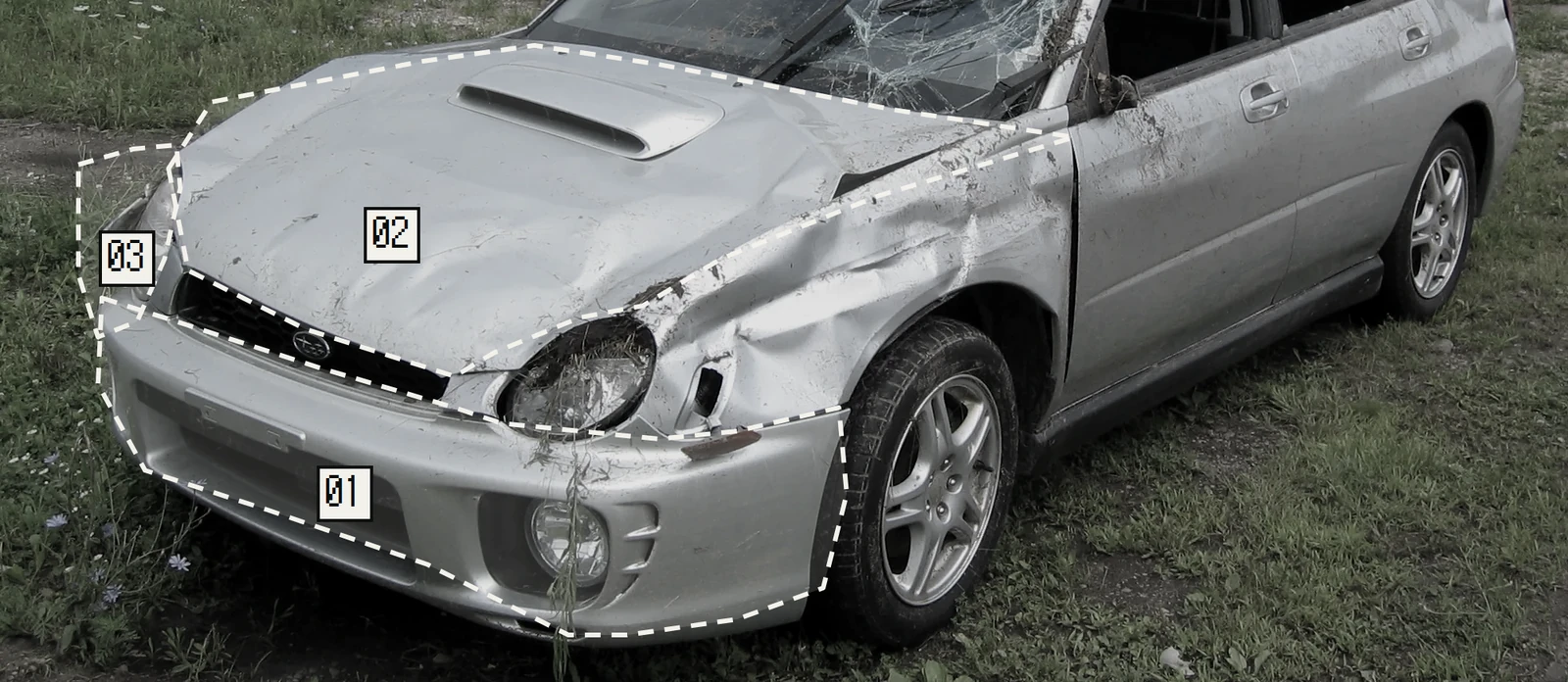 Claude Opus 5.5
Same photos, same request
Example4 parts · 3 missed · 1 judgment without evidence
- 01Front bumperNo evidenceBrokenRecommended: Replacement
- 02HoodSeverity rated lowScratch · MinorRecommended: Painting
- 03Right front fenderPart on the opposite sideDentRecommended: Sheet metal repair
- 04Rear windowShattered · SevereRecommended: Replacement
The result panels are examples drawn for illustration. This is where real measured results will go.
Photos are free to use (msprague, CC BY-SA 2.0), and we covered the license plates. 2003 Rollover 112003 Rollover 242003 Rollover 062003 Rollover 01CC BY-SA 2.0
How it works
You upload the photos
Upload photos of the accident vehicle all at once. It takes 1–120 photos per case, in PNG, JPEG, WebP, HEIC, or HEIF.
Make a request, and the inspection starts
You don’t have to wait. When it’s done, the results are kept in the project.
You check the results for each part
See the damage type, severity, and recommended repair method for each part, and open the evidence photos attached to each result.
Your team sees it together
The results are kept as a project, and everyone in the same workspace can reopen them anytime.
Specs
CLATRA Flash at a glance
| What it does | Finds the damaged parts, the damage type and severity, and the recommended repair method in vehicle accident photos, together with evidence photos. |
||||||||||||||||||||
|---|---|---|---|---|---|---|---|---|---|---|---|---|---|---|---|---|---|---|---|---|---|
| What you put in | 1–120 vehicle accident photos · PNG, JPEG, WebP, HEIC, HEIF · Up to 50MB each Project name (optional) |
||||||||||||||||||||
| What you get | For each part: damage type and severity, recommended repair method, and evidence photos for every judgment Saved as a project · Read as JSON through the API |
||||||||||||||||||||
| Supported languages | Result explanations are in Korean by default, and you can specify the language (output_locale). |
||||||||||||||||||||
| Processing time | 1 min 33 s per case (our own measurement, average of 6 accident cases)
|
||||||||||||||||||||
| Cost basis | $0.60 per case · Costs at public list prices
|
||||||||||||||||||||
| Performance | Accuracy as actually measured by working professionals, average of 6 accident cases
|
||||||||||||||||||||
| API | Supported · Upload photos, run, check status, read results (JSON) |
How we measured, and terms of use
Here we note how we measured the numbers on this page, what we compared them with, and what the limitations are.
| Made by | unblanq (Flow) · Customer support flow@oddconcepts.kr · +82 2-556-7650 |
|---|---|
| Measurement date | October 18, 2026 |
| Information updated | October 20, 2026 |
| Test cases | 6 real accidents. We gave every agent the same photos, the same request, and the same answer format, once for each case. |
| Basis of comparison | We compared against real repair estimates written by working professionals, matching by part and by work item. |
| Accuracy calculation | Precision is the share of what was found that matches the estimate, recall is the share of estimate lines that were found, and accuracy (F1) is the harmonic mean of the two. |
| Time | From the request until the results come out. For Flow, we left out the time spent uploading photos. Flow average: 1 min 33 s. |
| Cost | The price per case, at public list prices. We didn’t use temporary discount prices. Flow average: $0.60, median: $0.41. |
| Compared with | Claude Opus 5.5, GPT-6 Astra, Gemini 4 Argon. Every model with a selectable reasoning level ran at its highest. Gemini 4 Argon didn’t finish the first case within 55 minutes, so we didn’t run the remaining cases. |
| Limitations | It doesn’t judge damage that the photos don’t capture. |
Flow starts with an invitation
Once your company is invited, use the link in the invitation email to create your company workspace and get started right away.
Already a member of a company that uses Flow? Join through the invitation your admin sends.
Don’t have an invitation? Contact customer support (flow@oddconcepts.kr).